



Top Social Media Mishaps of 2013
It seems that major brands using social media have rapidly improved so far during 2013, compared to previous years. Social media demands a new approach to crisis now, brands are seen making light of crisis in the right situations, and this completely turns around the negative sentiment into a viral sensation. Back in 2012 we saw O2 turn around their network outage crisis, when they were faced with difficult tweets they responded back with witty retorts to trolls, and friendly help for those that needed it.
Stuffy corporate responses and deathly silences are no longer acceptable as they don’t satisfy the high expectations of today’s social media customer service. Negative conversations don’t necessarily mean a huge brand disaster – as long as you stay in control, monitor brand sentiment and have a solid crisis and social media policy, you may just be able to ride out the social storm.
However, not all social media management has been able to whip up a viral storm for the right reasons, as we compile a list of the best and worst social campaigns every week on Social Slurp, we thought we would take a look at the biggest fails of 2013 so far:
Tesco – January 2013
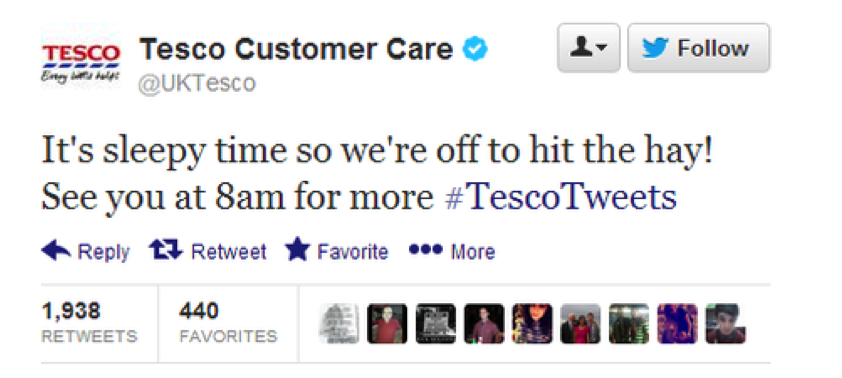
After the Tesco horse meat scandal, things were going from bad to worse for the supermarket. Within minutes of the news breaking, Twitter was awash with horse-related jokes, puns and of course, horror that burgers labelled as beef, were in fact contaminated by horse meat.
Even though they were already amidst a social media crisis, a tweet came out from the official Tesco Customer Care account that seemed very hard to believe!
The tweet received a lot of negative attention and criticism, which caused Tesco to reply to hundreds of users with an apology
‘I’m terribly sorry. That tweet was scheduled before we knew of the current situation. We’d never intend to make light of it.’
We’re not sure if their excuse is to be believed, but whatever their intentions were, the moral of the story is to always check scheduled posts and try not to make light of sensitive situations, unless the time is right.
China Red Nightclub – January 2013
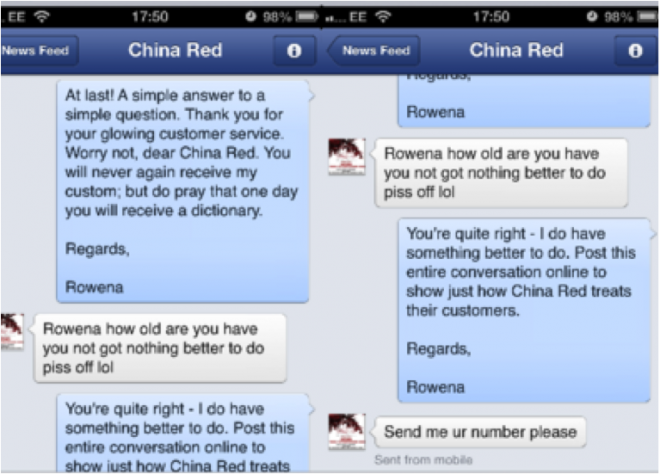
If your brand receives constructive criticism on a public channel such as Facebook, the best way to deal with it is probably not to reply with snarky or profanity-laced comments. Well, that is what Birmingham nightclub, China Red decided to do!
After a few interactions, the club then made the conversation private and proceeded to insult the poor customer, when threatened with posting the conversation online, the club then tried to back-track by saying their account had been hacked and requested that she take the photos down. The full exchange makes for interesting reading! Screenshots soon went viral which created a media storm, this proves that underestimating the power of social media can really get your brand in a crisis.
HMV – February 2013
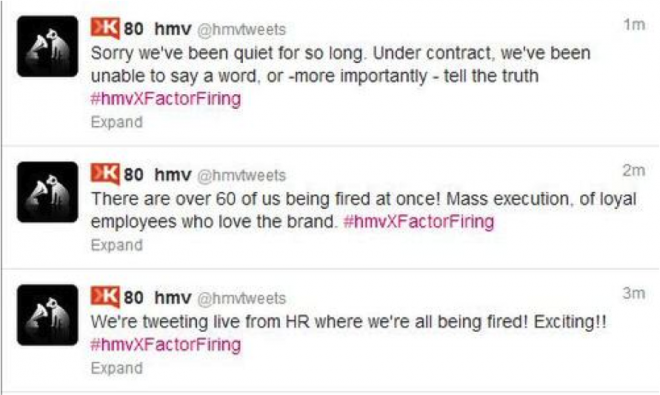
Back in January, HMV declared that they were going into administration. Inevitably, the company and its employees were facing some tough times. Well, the company’s crisis was about to get a whole lot bigger when a fired community manager decided to take matters into their own hands and ‘live’ tweet the company HR meeting under the hashtag #hmvXFactorFiring. The tweets were soon trending worldwide, with over 700 tweets being sent about the situation in the first 30 minutes.
The perpetrator revealed that the marketing director had limited knowledge about social media, and that an unpaid intern had set up the account. In this situation, channels should have been on lock-down, and all access and passwords to the accounts changed into the right hands.
Benadryl – July 2013
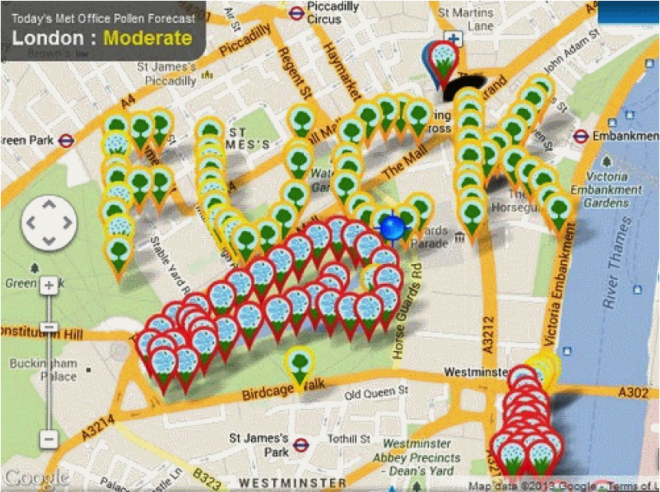
Anti-allergy drug Benadryl thought it would be a nice idea to crowd-source a social pollen count map, allowing hay fever sufferers to report top pollen hotspots that they came across throughout their day. The map was designed to update in real-time, but they soon found that a group of clever (and very cheeky) internet users were defacing the map, rather than using it for its intended purpose. Instead of using the pollen pins to label hot spots, they created the artwork above!
Benadryl took down the defaced social pollen count page, and replaced it with a light hearted ‘Thanks for all your interest’ spelled out in the pollen pins. The crowd-sourcing idea wasn’t necessarily a bad one, but it really wasn’t fully thought through in regards to its usability and access. Maybe they should have had better crisis management in place to tackle this straight away and prevent multiple pins being placed at any one time.
Summary
So, there we have it - some of the biggest screw-ups of 2013 so far! We’ve learnt that if your brand screws up:
- You need to ensure that your audience KNOWS you are sorry, they ultimately get to decide if it is sufficient enough
- Apologise sincerely and promptly
- Monitor your social sentiment
- If you don’t see a recovery within hours, reassess the situation, and apologise again sincerely
Failing to say sorry makes you look disingenuous and stuck-up. Social media has a longer memory, and a wider reach. If you screw up and miss an apology it can spread wide, and fast and above all, it can take a long time to recover. It needs to get sorted and put right, fast!



 Join us
 Follow us
 Our credentials
Pingback: Planning For Spontaneity | Great Improvised Content Doesn’t Come Out Of Thin Air
Pingback: Planning For Spontaneity //